Bookmark this site Online message 中文站Welcome to the official website of Beijing Yuanlai Water Treatment Equipment Co., LTD.!
Service Hotline
+86 010 59792055 / +86 13910114728

How to choose good water, such as drinking good water, Beijing Yuanlai Water Treatment Company is here to help you answer: (1) Mineral water. Genuine mineral water is good and has certain functions. However, if the minerals in some mineral water are not in proportion, it may not be good. Especially, some mineral water is actually artificially added with several mineral trace elements to purified water. It is difficult to ensure a natural and normal proportion, and some necessary trace elements may also be lacking. One should choose genuine brand water for drinking. (2) Pure water (distilled water, space water) has removed all harmful and harmless substances and elements. If pure water is used for drinking and cooking, what are the various trace elements in the water? If this goes on for a long time, there might be potential harm. It is used for making tea and drinking to maintain a good taste of the tea water, but it should not be used in excessive amounts. Especially the elderly and children should not drink it for a long time. (3) Filtered tap water. The tap water treated from the water plant has already been subject to 35 types of monitoring. However, the water that has passed through
Details >Should I drink the water from the water dispenser or not?
Barrel water, on the one hand, has substandard buckets, and on the other hand, it is also something that consumers should pay more attention to, that is, the so-called clean purified water that enters the human body. Is the water that everyone drinks every day really clean and pollution-free pure water? Have bottled water and barreled water really met the standards? However, nowadays many companies and families choose to use water dispensers and bottled water. So, what issues should people pay attention to when choosing bottled water? Beijing Yuanlai Water Treatment Company hereby offers suggestions on how to select and drink bottled water for everyone:
Details >The editor of Yuanlai Jun learned that a resident reported that when making soy milk with well water at home, the result was not soy milk but a mixture of layered water and some insoluble substances. However, the same beans could be made into soy milk with the tap water from a neighbor's house. In response to this strange inquiry, the municipal prevention and control department conducted a water quality test on the well water in the village, thus revealing the mystery that well water could not be used to make soy milk. Does everyone know what the reason is? According to the test results, the total hardness and nitrate nitrogen of the water quality seriously exceeded the standard. Among them, the total hardness was 720mg/L, which exceeded the national standard of 270mg/L. The test result of nitrate nitrogen was 96mg/L, which was nearly five times higher than the national standard. According to relevant analysis by the municipal disease control center, the reason why this water cannot be used to make soy milk might be related to the excessively high hardness of the water.
Details >"Beijing fully automatic water softening?" Beijing drinking water filter?
Water softeners mainly address the problem of scale caused by hard water. Therefore, in the United States where water quality is relatively hard, household water softeners have become quite common. Household water softeners have entered the market, mainly targeting the regions of North China and Southeast China where water quality is relatively hard, and are still in their infancy. At present, the terminal sales of the products are mainly concentrated in Beijing and Shanghai. Why do we need to soften water? Natural water can be divided into two types: hard water and soft water. Water containing a relatively large amount of calcium and magnesium ions (inorganic minerals) is called hard water. Conversely, it is called soft water. If the hardness of water is caused by the presence of sodium carbonate or magnesium bicarbonate, such water is called inherently hard water. If the hardness of water is caused by sulfates or chlorides containing calcium and magnesium, such water is called eternal hard water. Simply put, water with a calcium carbonate content of less than 10 milligrams per liter is considered high-standard soft water. You know
Details >What are the ways to add scale inhibitors to circulating water?
What are the ways to add scale inhibitors to circulating water? To meet the diverse demands in industrial production, scale inhibitors can be classified into many types, and circulating water scale inhibitor is one of them. Circulating water scale inhibitor is specifically designed to clean organic and biological scale on reverse osmosis membranes and ultrafiltration membranes. Different usage methods of reverse osmosis chemicals achieve different effects. Let's take a look at the dosing methods of circulating water scale inhibitor below 1. Shock addition: As there are still a small amount of surviving bacteria, algae and microbial salts retained on the surface of the reverse osmosis membrane, these bacteria and algae will reproduce and grow within a certain period of time. Therefore, it is necessary to regularly shock add scale inhibitors to promptly remove the bacteria and algae on the membrane surface. Shock addition should be carried out once or every two weeks to centrally kill the bacteria and algae in the system. The dosage for shock dosing is generally around 100ppm.
Details >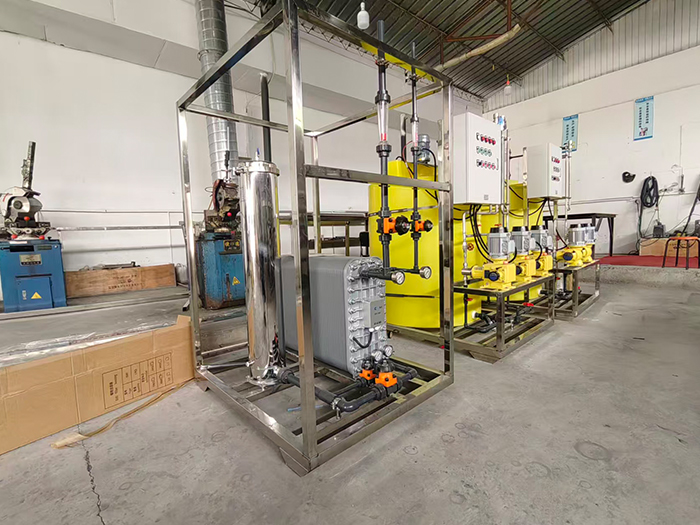
Yuan LaiEDIThe ultra-pure water equipment uses electro-deionization technology.EDIElectrodeionization is a water purification method that combines the dual advantages of electrodialysis and ion exchange. It does not require acid-base chemical regeneration and can continuously and stably prepare high-purity ultrapure water. Under the action of a direct current electric field, ion separation in water is completed. At the same time, water is electrolyzed to generate hydrogen ions and hydroxide ions, achieving automatic regeneration of the resin without the need to stop the machine for manual regeneration. The pre-treatment combined with reverse osmosis can prevent oxidized substances from damaging the resin, ensuring stable effluent quality and widely meeting the high-standard water usage requirements of various industries.
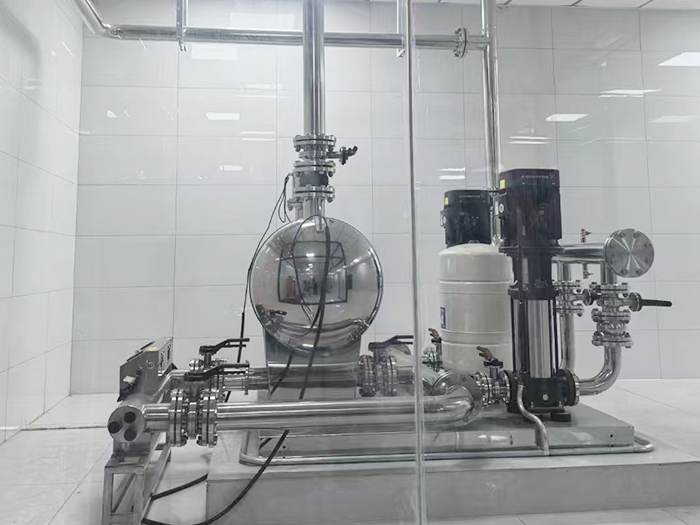
The non-negative pressure water supply equipment can be directly connected to the municipal water supply network, making full use of the residual pressure of the original network for superimposed water supply. Fully enclosed operation does not require the construction of a domestic water tank, eliminating secondary pollution. Intelligent variable frequency voltage stabilization, energy-saving, quiet and easy installation, it is the preferred equipment for secondary water supply in high-rise residential buildings and commercial buildings.
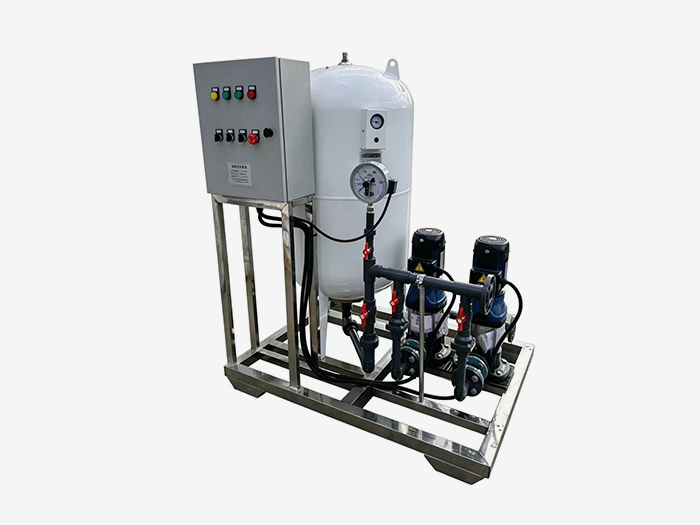
Constant pressure water supply equipment is widely used in central air conditioning, floor heating, industrial closed-loop water circulation, and boiler systems. It integrates automatic pressure stabilization, automatic water replenishment, automatic exhaust, pressure relief and buffering functions. It stabilizes the pressure in the pipeline network, eliminates abnormal sounds caused by air blockage, and prevents damage from negative pressure and water shortage in the pipeline. It is an essential supporting equipment for HVAC and circulating water systems.











 Landline:+86 010 59792055
Landline:+86 010 63780188
 Mobile:+86 13910114728
 Email:bjyuanlai@163.com
 Email:Wanda Plaza, Fengke Road, Fengtai District, BeijingBseat6Courtyard No.3Building No.7layer708
Yuanlai Homepage Softened water equipment Reverse osmosis pure water equipment Water supply equipment Engineering case Technical service Enter Yuanlai Site map
Softened water equipment Reverse osmosis pure water equipment Water purification equipment Water supply equipment Automatic dosing equipment High-purity water (ultra-pure water) equipment Wholesale of water treatment accessories
Electric power industry Petrochemical industry The electronic semiconductor industry The photovoltaic new energy industry Pharmaceuticals & Biochemical Engineering School research units Food and beverage industry Enterprises and public institutions
Reverse osmosis membrane Star-counting pump Fleck Valve Runxin Valve Instruments and meters Ultrafiltration membrane Softening resin Resin tank
